2 Banking, Double Spending and a need for Cryptocurrency
Banking Sector
 How do you think the modern banking sector works?
The modern banking industry started about 700 years ago in the city-state of Venice. Many merchant lineages including the famous Medici family became extremely rich and powerful thanks to the industry.
Though Banking has undergone radical transformations in the last century, the fundamental principle remains the same - the customer pays some money for an institution to hold, protect and then give back a certain interest on a larger sum that the customer deposits.
This, however, means that the bank holds a larger power over deciding the rules of the transaction thanks to its bargaining capacity in the transaction. This phenomenon is called the centralisation of authority.
Centralisation is the concentration of control of an activity or organization under a single authority.
Banks naturally have a lot of employees and so need money themselves. This, they achieve through sanctioning loans by using customer's money. I would dare not go into this as it is pure economics, not a great concern at this point.
In the modern-day, we have digital banking. All the transactions can take place over the internet and a desktop or more recently on mobile devices. The bank naturally deduces a transaction fee. This is because the banks need to maintain a database and then also need to ensure that the data is consistent. Most modern databases work in the same way.
A makes a payment. The amount is deducted from A's account. Payment is made to B. B's account is updated. If B's account is not updated within a reasonable time frame, A's payment is refunded. All these steps involve a temporary suspension of the amount paid after been deducted from A's. This is also called read-write lock or isolation of transaction.

This is to ensure that double spending is avoided. And the bank charges money for all these steps.
Double Spending
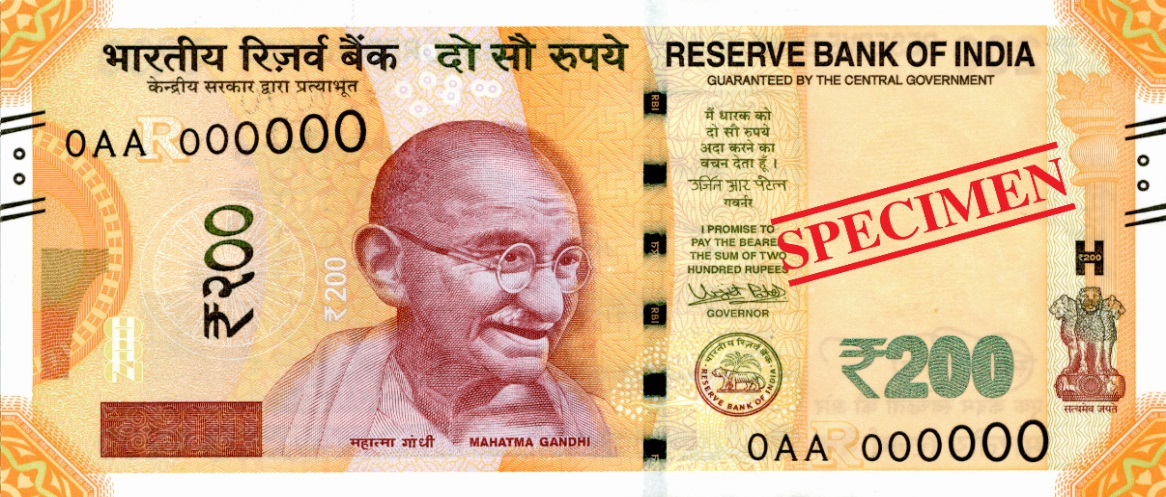
Every currency note issued by the respective Central Bank of the country has a unique serial number. This, in theory, means if I own the note and use it for a transaction, it is spent. i.e. I no longer can carry out another transaction using the same note without another transaction.
In simpler words, if I use this 200 Rupees note to buy vegetables, I cannot use it again to buy milk until I get the same note back where I am involved in another transaction, say I went to the same vendor again and this time I use a 500 rupees note for a 300 rupees transaction and the vendor returns the same 200 rupees note.
Any currency note is a legal tender between the central bank and citizen where the citizen holds the right to barter an equivalent amount of goods and this policy is backed by the government.
Historically speaking, gold or silver or metal was used as currency. But the system of legal tenders guarantees an equivalent transaction using paper. This type of currency is called fiat currency.
In any economy, fake notes are illegal because of the same reason. If one can spend the same note twice without any devaluation in his assets - it is called double-spending. This would lead to infinite money in transaction. Everyone is a millionaire, maybe with more money than Jeff Bezos holds today. And that means everything costs millions!!! (Naturally, everyone has infinite money. Everyone can buy everything. But the goods are limited. So, there is hyper-inflation!!)
Crypto-currency: A need
What if the transaction charges that the bank was demanding is eliminated. And this is done by eliminating the bank?
But this means I hold all my money. What about the transaction policies in existence? And what if there are no policies at all? Anarchy!
Actually yes and no. Let everyone hold their money. And let everyone be involved in all transactions - if not as parties involved in giving and taking - then as observers who verify this transaction, just like the government and central bank did in a normal economy. Let digital codes work as a transaction under several layers of encryption. And let each transaction have a unique id. Let each user have a unique id and a unique key to encrypt his/her transactions.
This is called decentralisation of monetary transactions.
You need no central authority and actually no intermediatory to help you carry out your transactions.

So, what about the fraud of double transaction?
Since all users in the network stand as the ones who guarantee the transaction, to commit fraud, the fraudster would have to secure the confidence of the majority that his/ her transaction was valid. If the network is global, the chances of fraud are virtually zero.
Does this sound good? Maybe a little bit. Because some larger questions probably are:
- Why would people be ready to take part in a transaction they do not know of?
- What shall ensure such level of encryption?
- How are databases updated?
- Why would I be interested in a decentralised transaction? Doesn't it mean it's illegal?
- Who ensures the validity of a new transaction? i.e. Who ensures that I do not digitally create fake money on my end and then just use it. The rest will still hold my transactions legit!
- Doesn't it mean I do not need a bank and a central bank or any intermediatory and hence a threat to all service industries?
And many more...
Let's try to see through a ground-breaking encryption technique that actually led to a surge in cryptocurrency development.
Comments
Post a Comment